Canny is the customer-facing alternative to BuildBetter
BuildBetter uses AI to turn your sales and support conversations into signals and reports for your team. Canny does that work too, and adds the half BuildBetter doesn’t have: a place for your customers themselves.
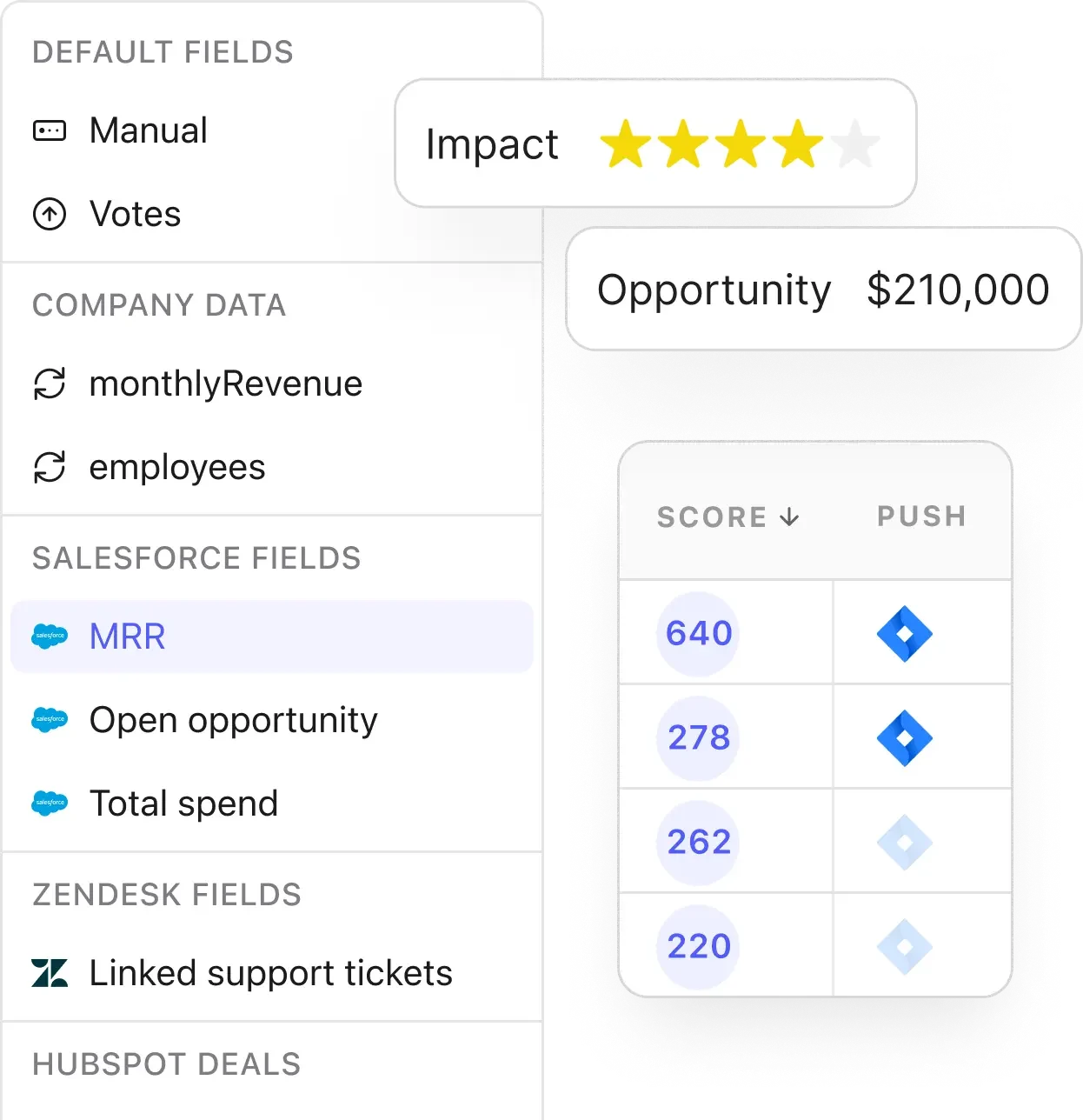
Table of contents
Where Canny and BuildBetter overlap
Both tools use AI to cut the manual work of understanding what customers want. They can both:
- capture feedback from sales and support tools like Gong, Intercom, Slack, and Zendesk
- structure it into themes and product areas, and deduplicate similar requests
- tie requests to the accounts and ARR behind them
- push work into engineering tools like Linear and Jira
- query your feedback over MCP from Claude, ChatGPT, or Cursor
BuildBetter also generates PRDs and specs, which Canny does not. Canny’s MCP goes a step further than BuildBetter’s read-only server: it writes back, so you can create and update requests from your AI tools, not just read them.
The difference is what each is built to optimize for. BuildBetter turns conversations into internal outputs: insights, summaries, and product documents for your team. Canny takes feedback from those same sources and runs it as a system that includes your customers. A request can be captured, prioritized, discussed, and shipped in one place. If drafting structured outputs for your team is the whole job, BuildBetter does it well. Teams choose Canny for what happens out where their customers are.
What Canny does differently
BuildBetter works on feedback that already exists in a conversation you recorded. Canny adds a customer-facing surface. That changes both what you capture and what you can do with it.
Customers bring you requests directly A portal captures intent from people who never generate a conversation to mine. The customer who won’t file a ticket or hop on a call will still share an idea. So will the prospect and the community member. That feedback doesn’t exist in any recording, so a conversation-only tool never sees it.
You can engage on the request, not just read it When feedback comes off a call transcript, it’s a one-way signal. On a Canny request, you can reply to the customer, ask what they’re trying to do, and share an update. It all happens in a thread attached to the request itself. You dig into the why with the person who has it, instead of inferring it from a recording.
The roadmap works as a sales asset A public roadmap gets shared with prospects and shows them where the product is headed. BuildBetter produces nothing a prospect can see. Canny’s roadmap faces outward, and it closes deals.
A public portal deflects support When customers find an existing request and upvote it instead of writing in, that’s volume your team never has to handle. Aryeo’s vocal user base was clogging the support inbox with feature requests. After moving that feedback into Canny, they cut inbound support volume by 20%.
“It has reduced the number of inbounds in our support inbox by 20%, which is a big deal.”
Shipped work gets seen A changelog, both a hosted page and an in-app widget, tells customers what you released right inside your product. BuildBetter can draft release-note text and send a notification. But it has no changelog customers visit and no in-app widget.
With Canny, your workspace stays private to your team in Ideas, and you decide what becomes public. You get the internal AI analysis, plus a customer-facing surface. It brings in feedback, lets you engage the people who gave it, deflects support, and wins deals. That surface is the part BuildBetter does not have.
Pricing that stays stable as you grow
The two tools price on completely different things, and it shows up on your invoice.
BuildBetter charges a base subscription, then usage on top, and the usage is where the cost lives. You spend credits to process conversations, whatever the AI finds in them. By their own calculator, a couple hours of calls and a thousand support tickets a month lands around $314. A heavier month runs about $720. Because the meter runs on what you capture, the more you use it, the less predictable your bill.
Canny prices on outcomes, not processing. You pay for the users you track feedback from, and AI usage is unlimited. If a single customer floods you with feedback, they still count as one tracked user. Your cost tracks your customer base, not your call volume. It starts free, and paid plans begin at $79 a month.
How Strapi wins deals with a public roadmap
Strapi, the open-source CMS, runs its feedback and roadmap in the open for a community of millions. They’d used a competitor’s public feedback tool but found it thin. People upvoted without explaining why, so the team chased context with surveys. On Canny, the discussion sits on the request, discovery got faster, and the surveys mostly stopped. Interaction doubled. The public roadmap became a sales tool, with prospects citing product direction as a reason to invest.
“We recommend prospects look at our public roadmap, because customers love to know what's coming next, and it helps us win deals.”
See Canny on your own feedback
Start free in minutes, or book a demo to see how Canny captures, prioritizes, and closes the loop with your customers.